


Forest Dreams : capsule déco inspirée de la nature | Jamini
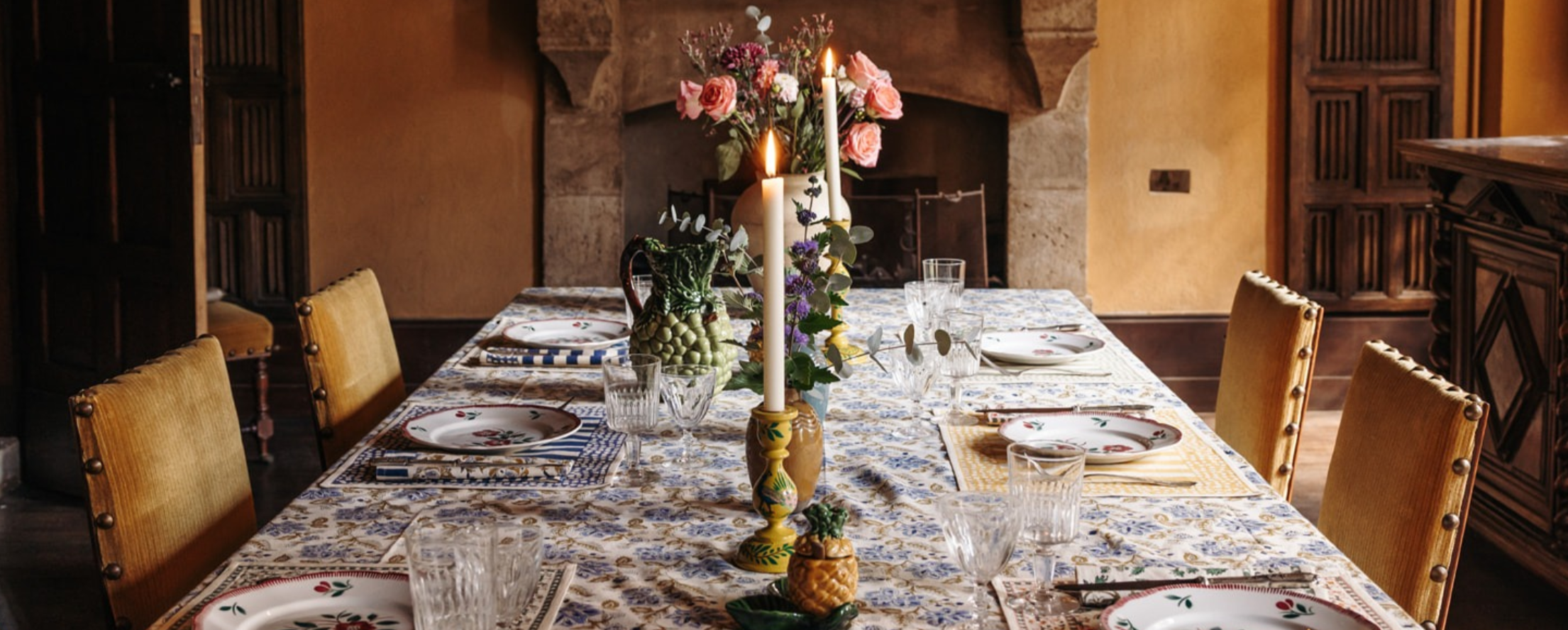
Nature-Inspired Home Decor, the French Way: Soothing Colours and Prints to Mix
Sage greens, foliage and earthy browns: the forest inspired our new Forest Dreams capsule collection. Frilled cushions, reversible quilts, printed lampshades, cotton voile curtains, scalloped placemats… Here’s how to bring nature into your home and mix colours and prints with relaxed French style.
How do you create a nature-inspired interior?
Nature-inspired decor rests on three things: a palette of botanical colours, floral or leafy prints and natural materials such as cotton, wood and velvet.
You don’t need to change everything. A few cushions, new bedding or a printed lampshade are enough to transform a room. This is the French approach to decorating: small touches, chosen with care, that make a home feel calm and lived-in.
What colours create a calming home?
Forest colours are naturally soothing. For Forest Dreams, we chose:
– sage green, soft and light, which goes with everything;
– leafy green, deeper, for character;
– earthy browns, chocolate and cinnamon, which add warmth;
– mustard and ochre, for a touch of sunshine;
– blue, for freshness.
Our tip: pick one main colour (sage green, for example), one warm supporting colour (brown or mustard) and one accent colour (blue). With these three, everything stays harmonious, even when you mix prints.
_1.png)
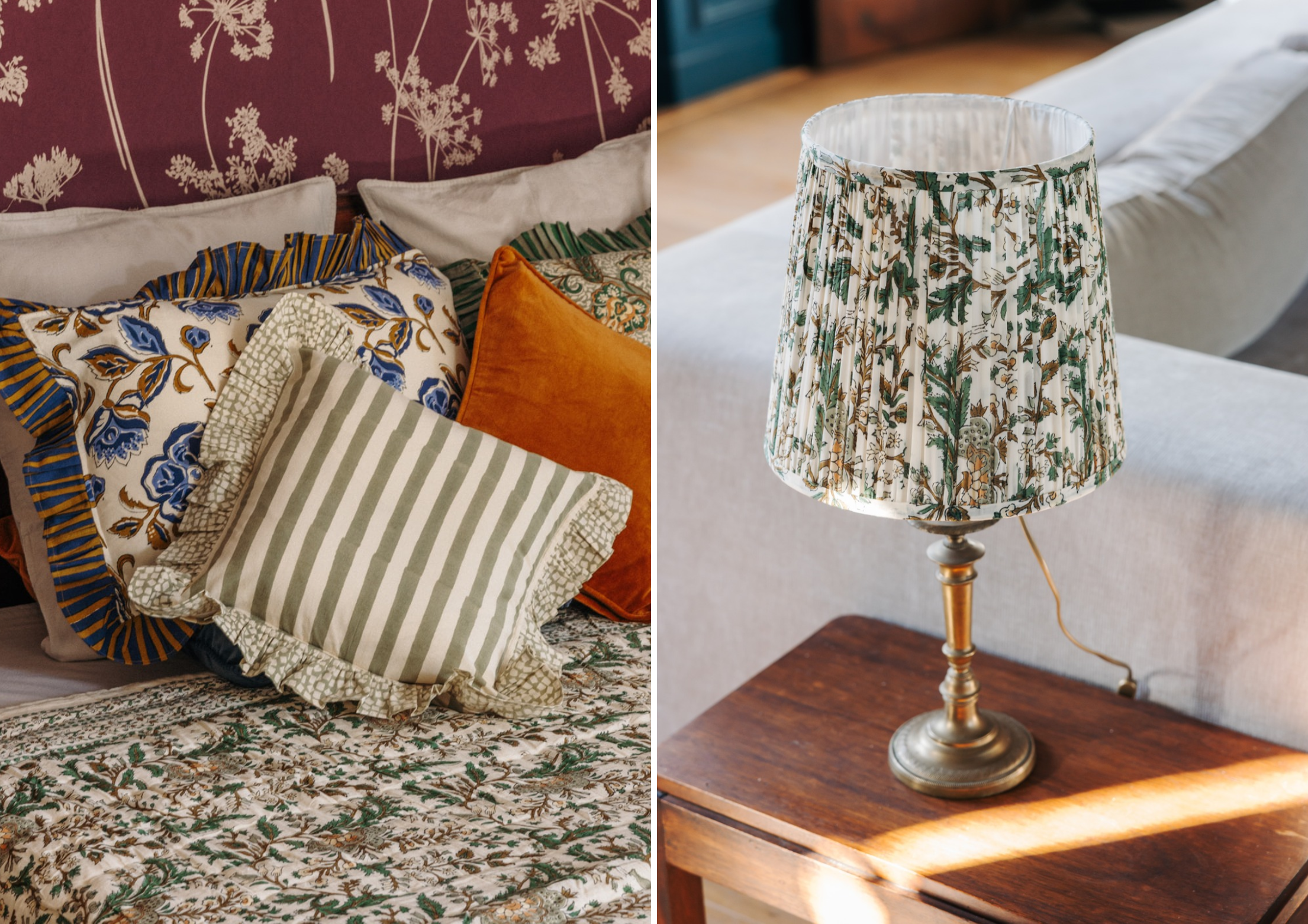
How do you style frilled cushions?
Frilled cushions bring a soft, romantic touch, very much in the spirit of a French country bedroom. To style them:
– on the bed, place two frilled cushions in front of plain or striped pillows;
– on the sofa, pair them with plain velvet cushions to balance print and texture;
– play with contrast: a floral cushion with a striped frill, or a green print with a mustard frill;
– don’t overdo it: two or three frilled cushions are enough, surrounded by simpler ones.
Velvet cushions in warm tones (burgundy, deep blue, ochre) bring out the prints beautifully.
.png)
Frilled cushions and velvet cushions
How do you use a reversible quilt?
Our reversible quilts have a floral print on one side and stripes on the other. Just turn them over to change the mood.
– floral side up, for a romantic, cosy bedroom;
– striped side up, for a more graphic look;
– folded at the foot of the bed, turned back on itself, it shows both sides at once. This is our favourite way to use it.
Add cushions that pick up a colour from the print, and finish with a frilled cushion.
.png)
How do you choose a printed lampshade?
A printed fabric lampshade instantly changes a lamp and gives off a soft, warm light, perfect for autumn and winter evenings.
– on a bedside lamp, choose a print that echoes your bedding;
– on a living-room lamp, go for a bolder pattern;
– with a brass or wooden base: these materials pair well with botanical prints;
– think about the light: when lit, the fabric shows the pattern. Light tones give more light, deeper tones a cosier mood.
How do you mix different printed curtains?
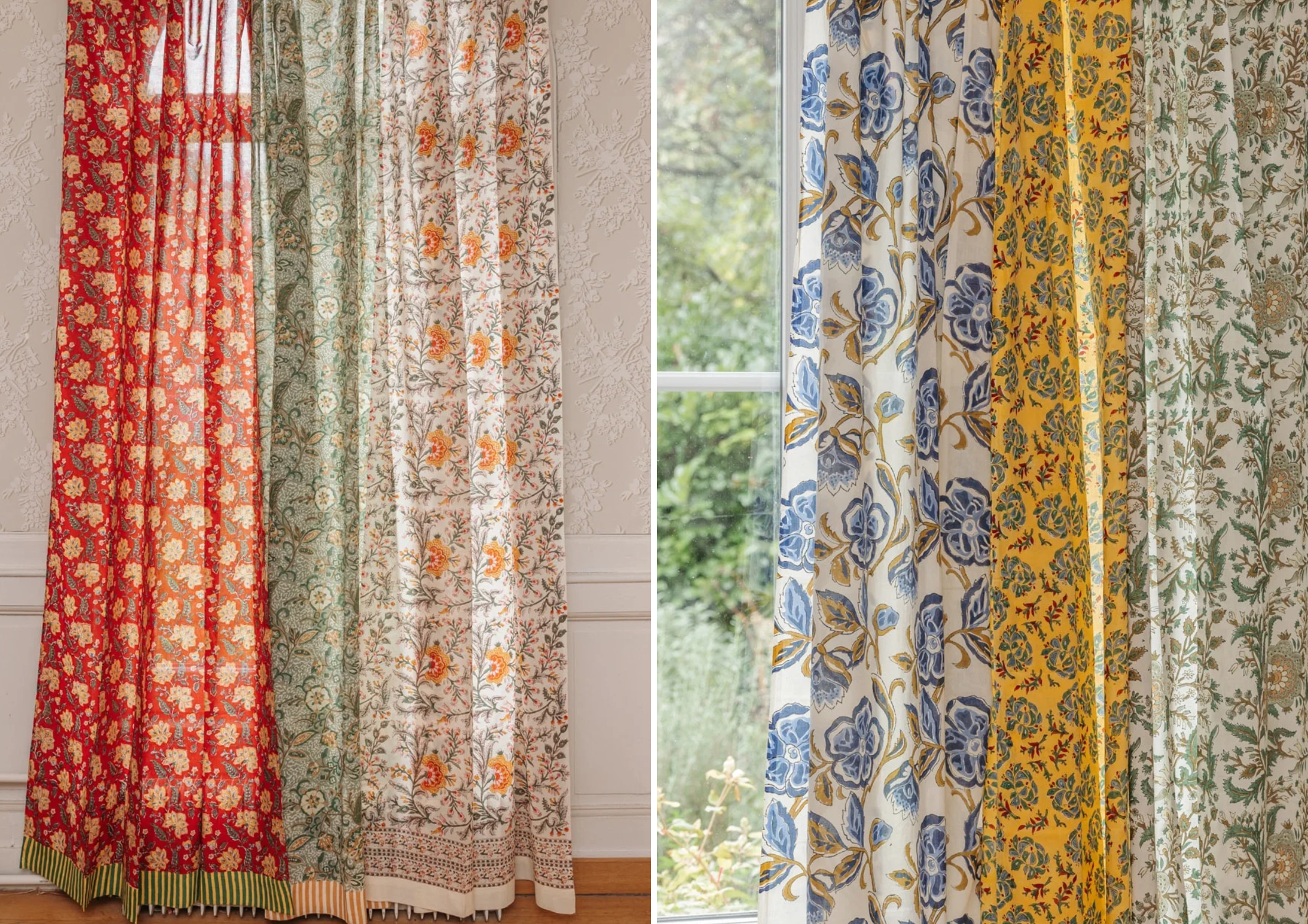
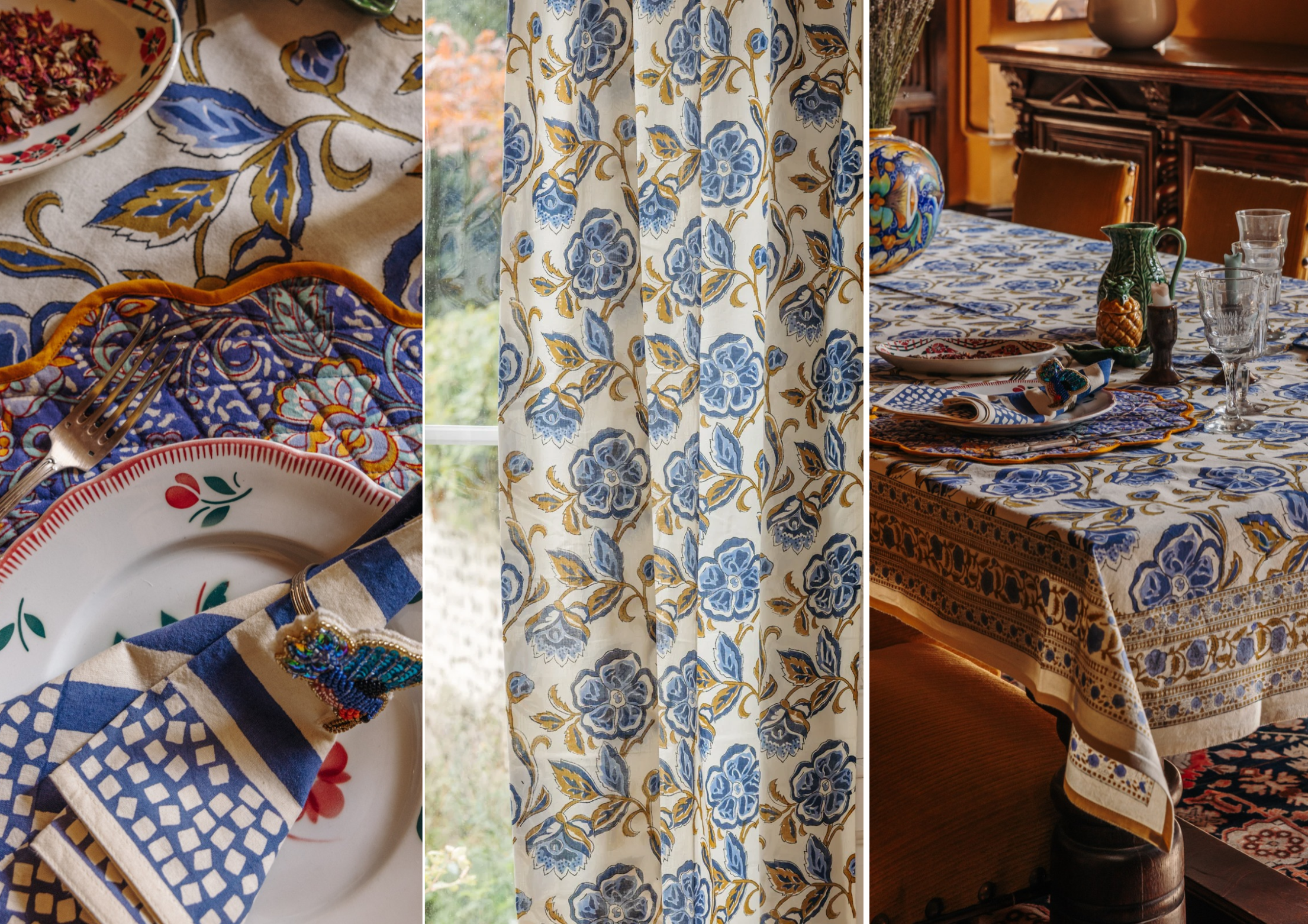
Mixing several printed curtains on one window is a very French way to dress a room: relaxed, a little unexpected, never too perfect. To get it right:
– choose one colour shared by all the prints: ochre links a blue floral, a mustard print and a green foliage pattern;
– vary the scale of the patterns: a large floral, a small dense print and a lighter leafy design;
– alternate cool and warm colours: blue, mustard, green;
– line up the borders and stripes at the bottom of the curtains to connect the panels;
– choose cotton voile: light and sheer, it lets the light through and brings the prints to life.
On a large window, three different panels create a patchwork effect. On a smaller one, two are enough.
How do you set a joyful table by mixing prints?
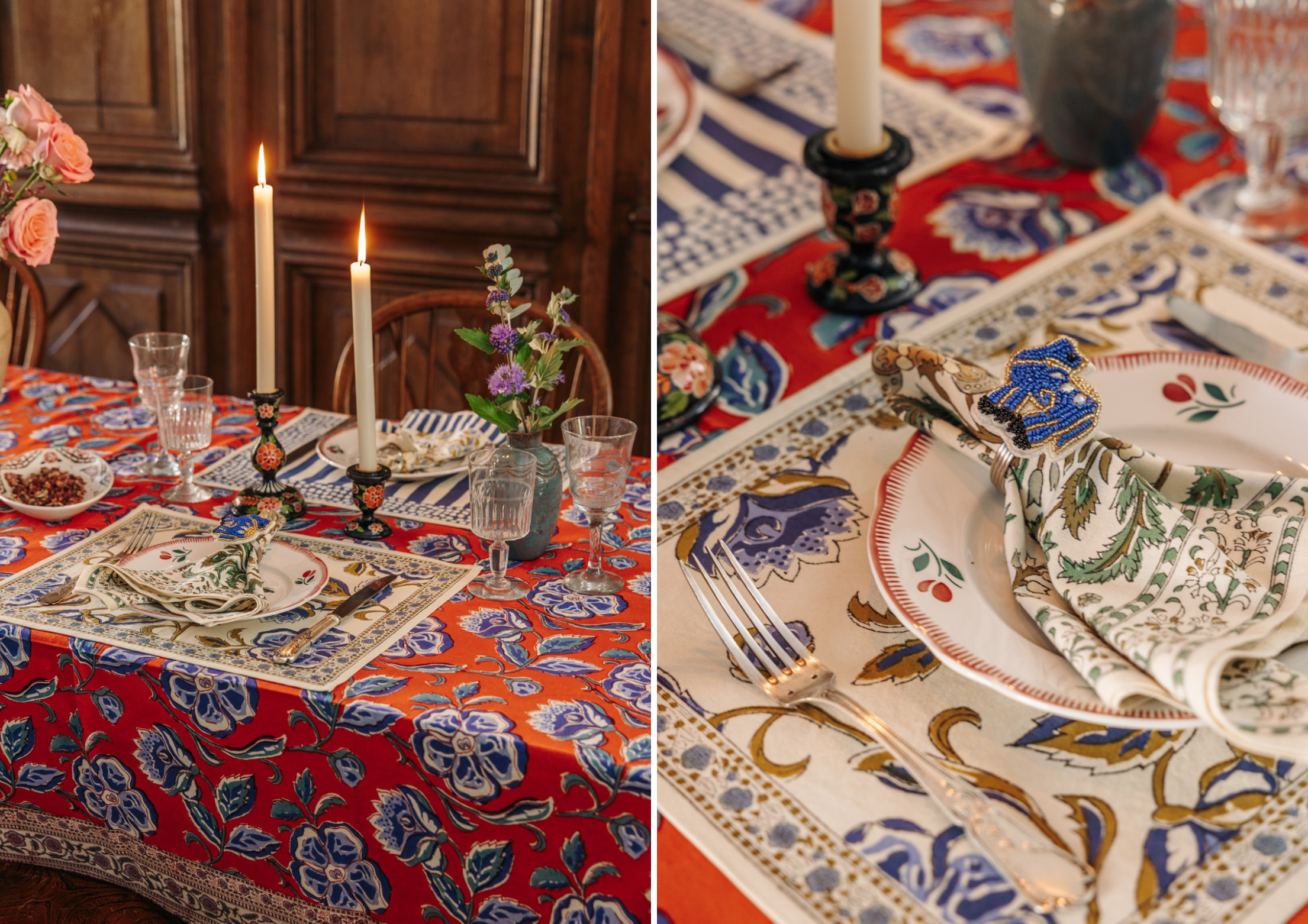
The table is the perfect place to mix prints, and the French have made it an art: l’art de la table. Here’s how to build yours:
1. A printed tablecloth as the base, to set the tone.
2. Scalloped placemats: their wavy edges add a playful touch and frame each plate.
3. Napkins in a different print, but in the same palette.
4. Animal-shaped napkin rings (peacock, parrot, kingfisher, camel), for a more playful table.
5. Turned wooden candlesticks, for warmth and light.
The secret: keep two or three colours in common between the tablecloth, placemats and napkins. Nothing needs to match. For more ideas, read our tips for French fall table decor.
Should you put placemats on a tablecloth?
Yes. Layering scalloped placemats on a tablecloth adds depth and frames each place setting, a classic French styling trick. Choose placemats in a colour from the tablecloth, or try a contrast: a sage-green placemat on a brown-toned tablecloth, for example.
.png)
How do you mix patterns without overwhelming a room?
1. Vary the scale: one large print (quilt, tablecloth, curtain), one medium (cushions), one small print or stripe (napkins, placemats).
2. Keep a shared palette of two or three colours.
3. Alternate prints and plain fabrics: a plain velvet cushion between two prints gives the eye a rest.
4. Trust what you love: as the French say, a home should look like you.
Why choose handmade pieces?
Each quilt is stitched by hand, line after line. Each print is laid down by an artisan, one colour at a time. Our pieces are designed in Paris and made in India by family workshops we have worked with for years. It takes time, and you can see it.
Choosing handmade also means supporting skills passed down through generations, and choosing pieces that last for years.
Shop the Forest Dreams collection
.png)
Frilled and velvet cushions – Reversible quilts – Printed lampshades – Cotton voile curtains
Tablecloths, scalloped placemats and napkins – Napkin rings – Candlesticks
Frilled pouches and laptop sleeves – Slippers
Forest Dreams – Nature as a common thread.